Separated by just a short vaporetto ride yet worlds apart in character, Murano and Burano have shaped Venetian culture for over a thousand years. One island guards the secrets of fire and silica; the other blazes with colour and threads its legacy into every fishing net and lace collar.
Long before Venice itself became a republic of consequence, the scattered islands of its lagoon offered refuge to mainland communities fleeing the chaos of barbarian invasions. Murano's earliest recorded settlements date to Roman times, when the island — then known as Amuriana — served as a modest fishing and trading outpost. Archaeological evidence suggests continuous habitation from at least the 6th century AD, when waves of refugees from cities like Altino and Aquileia sought safety in the shallow waters that larger armies found impossible to navigate. By the 7th century, a modest community had taken root, governed loosely under the growing influence of the emerging Venetian state.
Burano's origins follow a parallel arc. According to local tradition, the island was settled by refugees from the ancient Roman town of Barium, a detail that may explain the island's distinctive name. Like Murano, Burano developed as a fishing community, its earliest inhabitants relying entirely on the rich marine life of the northern lagoon. By the 10th century, both islands were formally recognised within the administrative structure of the Venetian Republic, paying taxes, supplying fishermen to Venice's markets, and slowly developing identities distinct from the mainland. Their isolation was not a limitation — it was the very condition that allowed each island's unique culture to crystallise over centuries.
Murano's transformation into the glass capital of the world began with a single decisive decree. In 1291, the Venetian Republic, alarmed by the constant risk of fire from the glassblowers' furnaces in the densely packed city, ordered all glassmakers to relocate their operations to Murano. What began as a public-safety measure became an economic and cultural masterstroke. Concentrated on one island, Murano's glassmakers — known as maestri — developed techniques and trade secrets that Venice jealously protected for centuries. Glassmakers were granted extraordinary privileges including the right to wear swords and to marry into Venetian noble families, elevating them to a social status almost unheard of for craftsmen.
The maestri repaid that trust with innovation. In 1450, Angelo Barovier developed cristallo, a brilliantly clear glass that stunned European courts accustomed to the greenish tinge of medieval production. By the 16th century, Murano's glassblowers had perfected millefiori, filigrana, and lattimo glass, techniques so advanced they would not be replicated elsewhere in Europe for generations. Venetian mirrors, made using Murano glass, were considered the finest in the world and appeared in the Palace of Versailles. The penalty for leaving Venice and sharing these trade secrets was death — yet some maestri did flee, carrying their skills to Bohemia, France, and England, slowly spreading Murano's influence across the continent.
Burano's defining craft, punto in aria lacemaking, emerged in the 16th century and rapidly became one of the most coveted luxury goods in Europe. According to the island's most beloved legend, a young sailor resisted the enchanting song of a mermaid and remained faithful to his beloved; as a reward, the sea goddess offered him a veil of sea foam, which the young woman then recreated in thread — the first Burano lace. Historical records are more prosaic but no less impressive: by the late 1500s, Burano lace adorned the collars and cuffs of European royalty, including Catherine de' Medici and Queen Elizabeth I. The craft required extraordinary eyesight and patience, with some pieces taking years to complete.
Both islands endured periods of serious decline. Murano's glass industry suffered a catastrophic blow when Napoleon's forces abolished the Venetian Republic in 1797, dismantling the guild structures and trade protections that had sustained the maestri for five centuries. Many furnaces went cold. The 19th century brought a slow revival, led by figures such as Antonio Salviati, who in 1859 established a glassworks that deliberately revived Renaissance-era techniques. Salviati's firm supplied mosaic glass for the restoration of St. Mark's Basilica and helped reconnect Murano's identity to its historic mastery, laying the groundwork for the island's emergence as a major tourist and commercial destination in the 20th century.
Burano's lace industry faced an equally existential threat. By the late 18th century, the laborious hand-lacemaking tradition had nearly vanished, undercut by cheaper machine-made alternatives from France and Belgium. The craft's revival came in 1872 when, at the initiative of Countess Andriana Marcello and with support from Queen Margherita of Italy, the Scuola dei Merletti di Burano — the Burano Lace School — was established. Elderly lacemakers who still remembered the old techniques were recruited to teach a new generation. The school not only saved an art form from extinction but reignited international interest in authentic Burano lace, and its museum, still open today, houses some of the most extraordinary examples of the craft ever created.
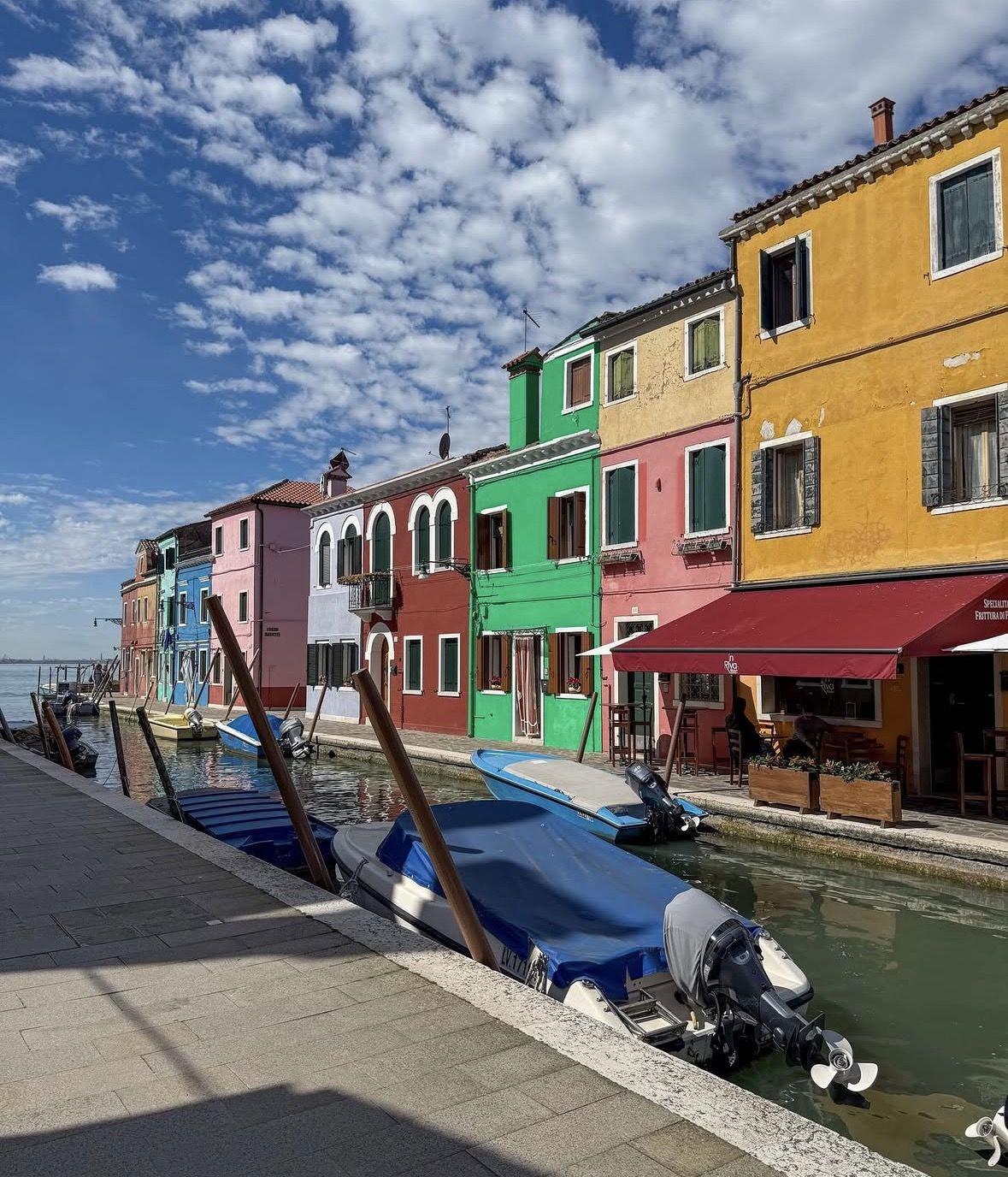
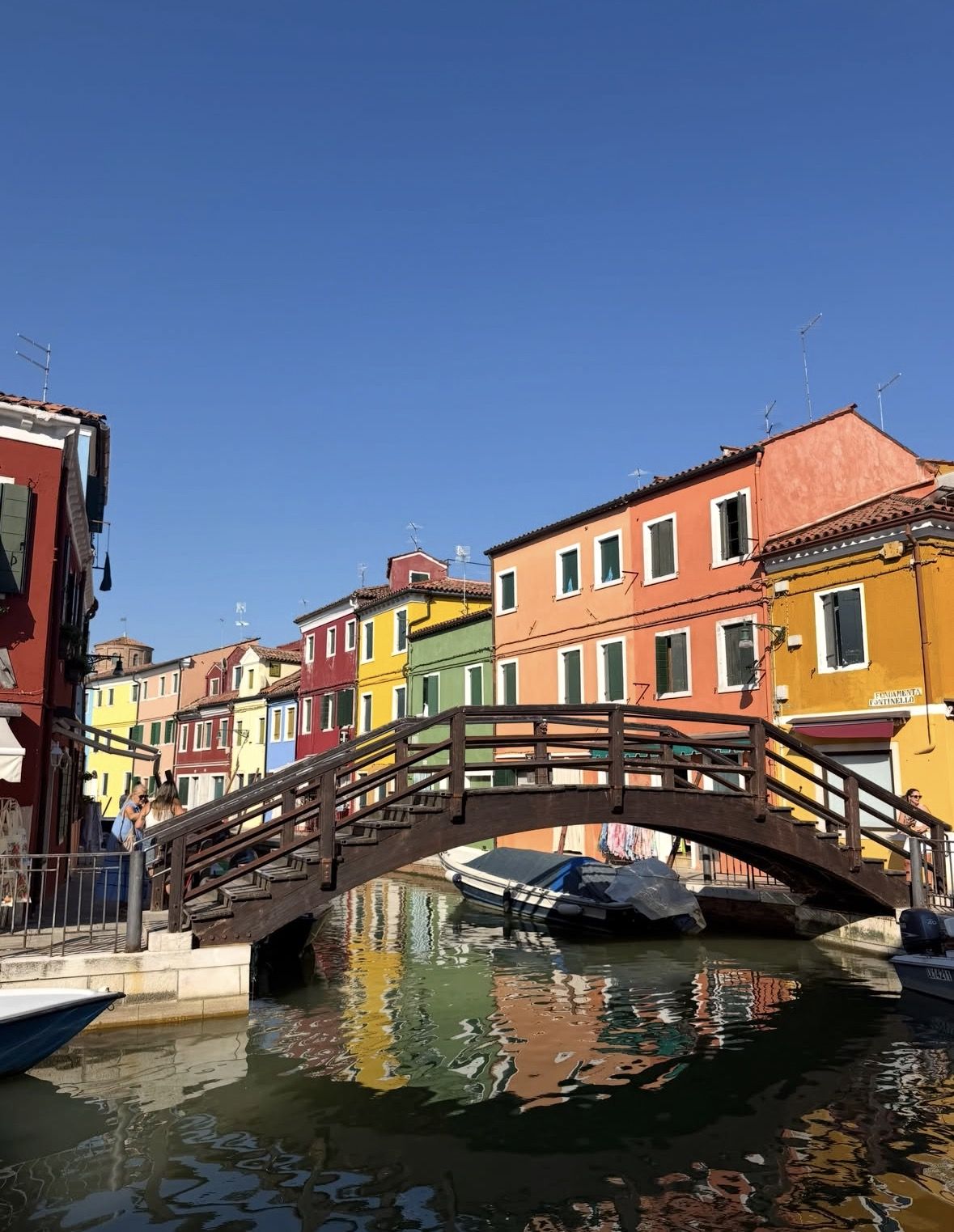
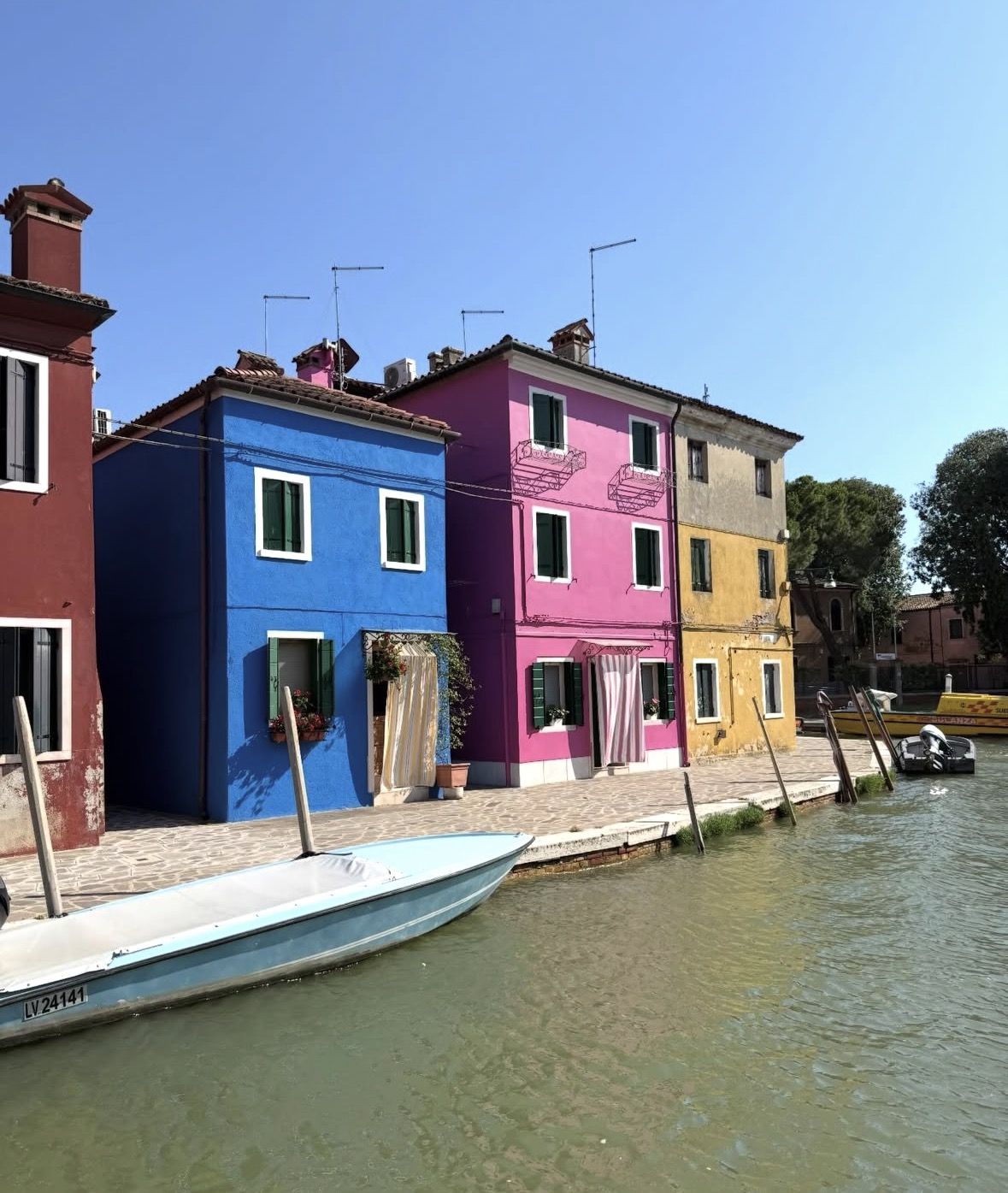
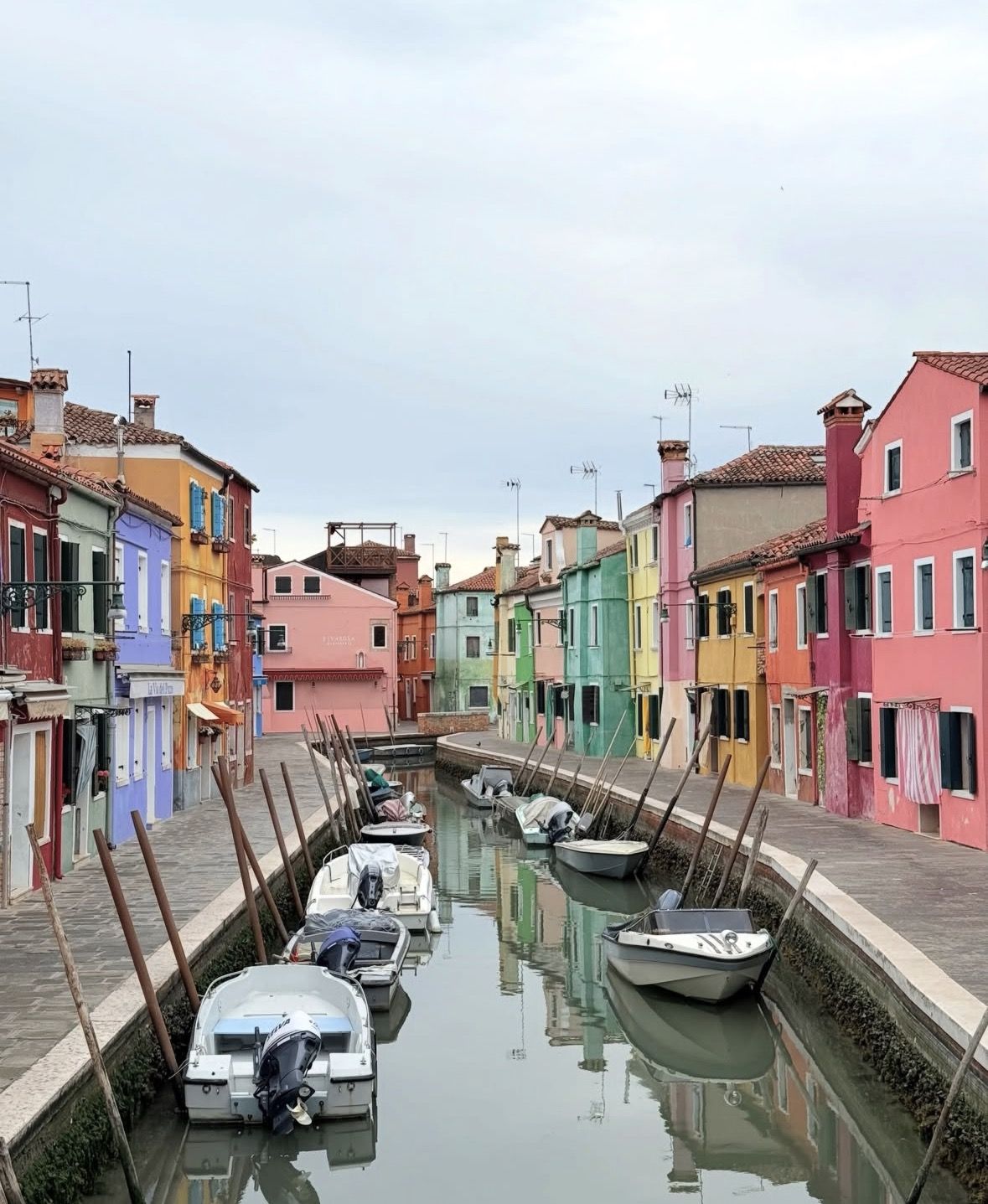
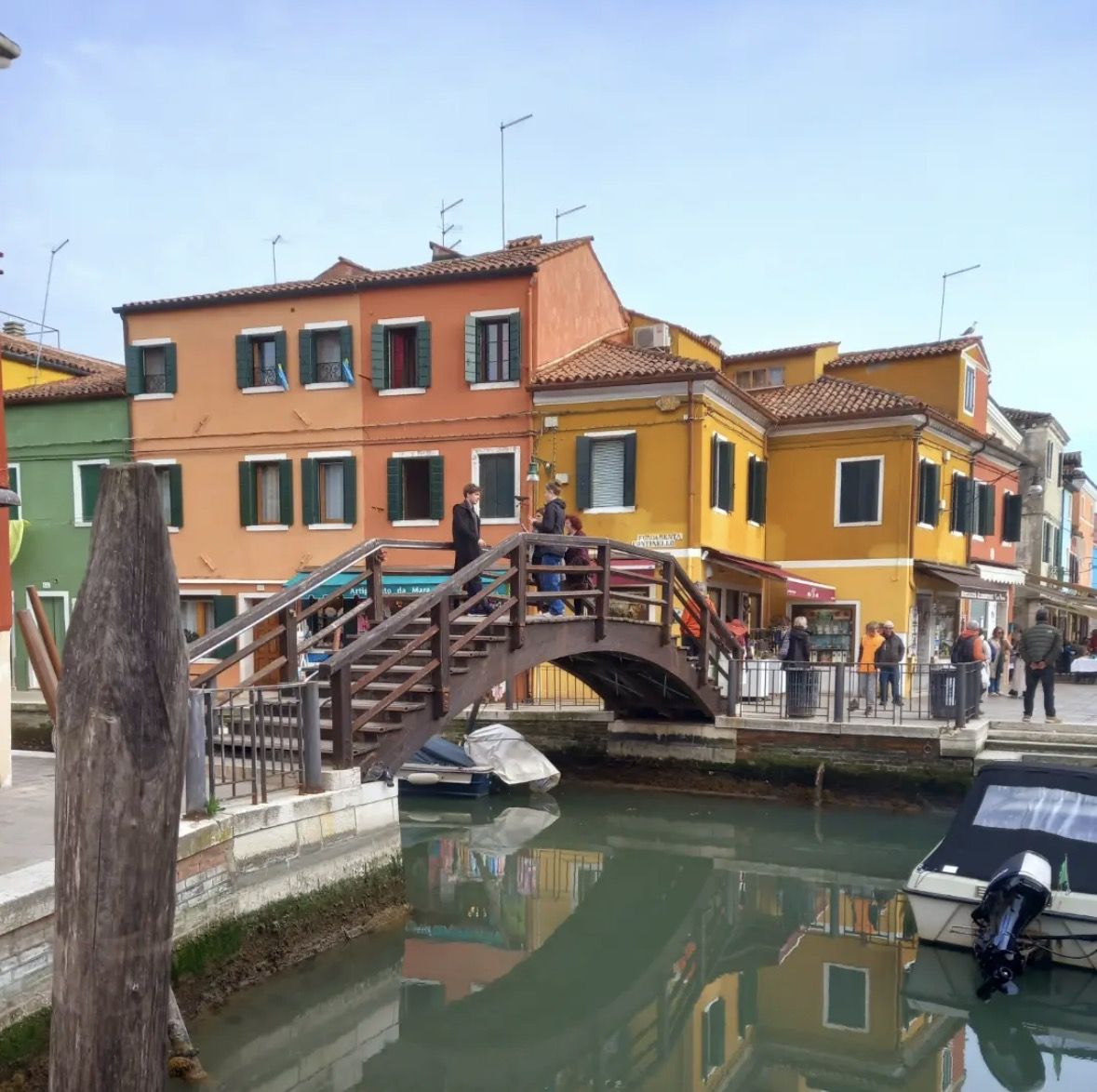
The vivid painted facades that make Burano one of the most photographed places on earth have their own layered history. Fishermen traditionally painted their homes in bold, distinct colours — cobalt blues, cadmium yellows, burnt oranges, deep greens — so they could identify their houses from the water on foggy lagoon mornings. Over time, this practical habit became a point of fierce local pride and communal identity. Today, Burano's colour palette is strictly regulated by the local government: residents wishing to repaint their homes must apply for permission and can only use the colour officially assigned to their property. The result is a living, maintained artwork that feels spontaneous but is, in fact, carefully curated.
Visiting Murano today means stepping inside working furnaces where master glassblowers still shape molten glass at temperatures exceeding 1,400°C, using tools and gestures refined over seven centuries. The island's Museo del Vetro, housed in the 17th-century Palazzo Giustinian, presents a sweeping timeline from Roman glass fragments to contemporary Venetian art glass. Dozens of showrooms line the Fondamenta dei Vetrai, offering everything from mass-produced souvenirs to signed studio pieces worth thousands of euros. Crucially, serious collectors and curious travellers alike can still witness live demonstrations that connect the present moment to a tradition stretching back to the age of the Doges.
Burano rewards every visitor with a sensory experience unlike anywhere else in Italy — the almost surreal intensity of its coloured houses reflected in still canals, the delicate geometry of lace displayed in cottage windows, and the lingering aroma of risotto di gò from its celebrated seafood trattorias. The Museo del Merletto continues to tell the lacemaking story in depth, while local artisans still produce authentic handmade lace beside their doorways. Together, Murano and Burano offer something rare in modern travel: communities where centuries-old craftsmanship is not a performance staged for tourists, but a genuinely living inheritance. Come and discover why these two small islands have captivated the world for over seven hundred years.
Ready to Experience It Yourself?
Skip the guesswork and explore these extraordinary islands with an expert local guide who brings every furnace, canal, and coloured doorway to life. Our carefully selected tours include skip-the-queue glassblowing demonstrations, insider lace workshops, and the best lagoon routes the vaporetto timetables won't show you. Secure your spot today and make your Venice visit truly unforgettable.
Book Your Tour Now